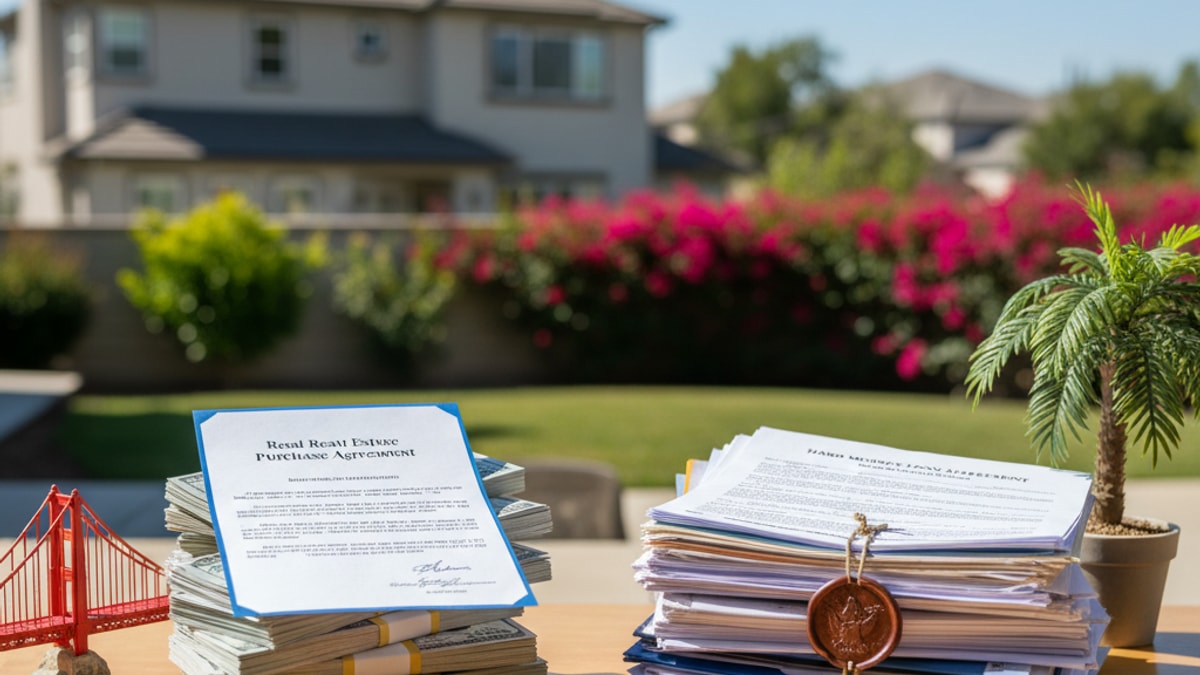
When you’re negotiating an offer on your home in California, two buyer types stand out: cash buyers and hard money borrowers. Here’s what sellers get wrong. They treat both as ‘fast closers’ and assume the risk profile is identical. It’s not. Cash buyers own the capital outright, close in 7–14 days, and eliminate financing contingencies entirely. Hard money borrowers secure private loans against property equity, pay 8–15% annual interest, and still carry the risk of loan denial if the collateral appraisal comes back unfavorable. That difference matters when you’re trying to close before a job relocation or avoid foreclosure.
Our team at Home Helpers has worked with hundreds of California sellers navigating urgent timelines. The decision between accepting a cash offer versus a hard money-financed offer comes down to three factors most agents don’t explain: certainty of close, speed to funding, and your tolerance for re-listing if the deal collapses.
What’s the difference between a cash buyer and a hard money borrower in California real estate?
A cash buyer purchases property using liquid funds they already own. No mortgage, no loan approval, no appraisal contingency. Hard money borrowers secure short-term loans (typically 6–36 months) from private lenders at interest rates between 8–15%, backed by the property as collateral. Cash transactions close in 7–14 days on average. Hard money loans fund in 5–10 business days but require property appraisal and underwriting, which introduces delay and denial risk.
Direct Answer: What This Comparison Actually Reveals
The confusion comes from the fact that both buyer types avoid traditional bank financing. But that’s where the similarity ends. Cash buyers present proof of funds. Typically a bank statement showing liquid assets exceeding the purchase price. Hard money borrowers present a loan commitment letter from a private lender, which is conditional on property condition, loan-to-value ratio (LTV), and exit strategy. The latter is not guaranteed funding. It’s a preliminary approval subject to final underwriting.
This article breaks down the timeline differences, the failure points unique to each buyer type, the cost structures sellers absorb indirectly, and the specific due diligence questions you should ask before accepting either offer. We’ve handled transactions where sellers chose the wrong buyer type based on closing speed alone. And ended up back on market 45 days later with a stale listing.
Funding Source and Ownership Structure
Cash buyers operate from personal liquidity. Savings, investment account proceeds, inheritance distributions, or proceeds from a prior property sale. The funds exist before the offer is written. When you accept a cash offer, the buyer wires funds directly from their account to escrow at closing. There is no third-party lender, no loan processor reviewing documents, and no underwriter who can reverse approval based on employment verification or credit score changes.
Hard money borrowers source capital from private lending institutions or individual investors who lend against real estate collateral. These loans are asset-based, not borrower-based. The lender underwrites the property, not the buyer’s income or credit history. Loan approval depends on the property’s after-repair value (ARV), current condition, and the borrower’s exit strategy (typically a refinance into conventional financing or a resale within 12–24 months). If the property appraises below the lender’s required LTV threshold. Commonly 65–75% of ARV. The loan amount is reduced or the deal is denied outright.
The practical implication: cash buyers are immune to financing collapse. Hard money borrowers are not. We’ve seen deals fall apart when the lender’s inspector flagged foundation issues that reduced the property’s ARV by 12%, pushing the LTV above the lender’s underwriting ceiling. The buyer couldn’t close. The seller relisted 38 days later.
Timeline, Contingencies, and Deal Certainty
Cash transactions in California typically close in 7–14 days. The only required steps are title search, escrow account setup, and wire transfer. No loan processing. No appraisal ordered by a lender. No underwriting review. The buyer can waive appraisal contingency entirely because they’re not borrowing. There’s no lender requiring independent valuation to protect their collateral position.
Hard money transactions close in 10–21 days on average. The lender orders an appraisal (3–7 business days), reviews title (2–3 business days), and completes underwriting (2–5 business days). If the appraisal comes back below the purchase price, the lender reduces the loan amount proportionally. The buyer must then cover the gap with personal funds or renegotiate the purchase price downward. If neither happens, the deal terminates.
Contingency comparison: cash offers eliminate financing contingency and typically waive appraisal contingency. Hard money offers retain both. The loan commitment letter is conditional. Not final approval. Sellers often mistake a hard money pre-approval for certainty because it’s faster than conventional bank financing. It’s faster, yes. Certain, no. The failure rate for hard money transactions due to appraisal or underwriting issues is approximately 8–12% industry-wide, compared to under 2% for all-cash deals.
Cost Structure and Seller Implications
Cash buyers incur no loan origination fees, no lender-required inspections, and no monthly interest payments. Their only transactional costs are title insurance, escrow fees (split with the seller), and recording fees. Because they avoid financing costs, cash buyers often negotiate purchase price more aggressively. They know their offer carries higher certainty, and they leverage that advantage.
Hard money borrowers pay 2–5 points upfront (a ‘point’ is 1% of the loan amount) plus 8–15% annual interest. On a $500,000 loan at 10% interest with 3 points upfront, the borrower pays $15,000 in origination fees and $50,000 annually in interest. These costs don’t directly affect the seller’s net proceeds, but they shape the buyer’s negotiating behavior. Hard money borrowers are cost-sensitive. They’re paying premium rates and need the deal to pencil for a profitable exit. If your property needs significant repairs or the ARV is marginal, hard money buyers will negotiate harder on price or walk entirely.
From a seller’s perspective, the indirect cost is time. If a hard money deal collapses after 21 days in escrow, you’ve lost three weeks of market exposure. In a declining market or if you’re facing foreclosure, that delay can cost you tens of thousands in equity or push you past your redemption period.
Cash Buyer vs Hard Money California: Financing Comparison
| Buyer Type | Funding Source | Typical Close Timeline | Appraisal Contingency | Financing Contingency | Failure Rate (Industry Avg) | Bottom Line |
|---|---|---|---|---|---|---|
| Cash Buyer | Personal liquid assets (bank accounts, investment proceeds, prior sale proceeds) | 7–14 days | Usually waived | None. No loan involved | <2% (primarily title issues) | Highest certainty. Fastest close. No lender approval risk. Best for urgent timelines or distressed properties. |
| Hard Money Borrower | Private lender secured by property as collateral | 10–21 days | Required by lender | Yes. Conditional loan approval subject to appraisal and underwriting | 8–12% (appraisal shortfalls, underwriting denial) | Faster than conventional but not guaranteed. Appraisal risk remains. Suitable when buyer has strong exit strategy and property condition supports LTV requirements. |
| Conventional Mortgage Buyer | Bank or credit union loan based on borrower income and credit | 30–45 days | Required | Yes. Extensive underwriting | 12–18% (employment changes, credit issues, appraisal gaps) | Slowest. Highest failure rate. Requires stable borrower financials and property condition meeting lender standards. |
Key Takeaways
- Cash buyers own the funds outright and close in 7–14 days with no financing contingency, making them the lowest-risk option for sellers facing tight deadlines or foreclosure.
- Hard money borrowers secure loans in 5–10 days but retain appraisal and financing contingencies, with an 8–12% industry failure rate due to underwriting or valuation issues.
- Hard money loans carry 8–15% annual interest and 2–5 points upfront, shaping how aggressively the buyer negotiates on purchase price and repair credits.
- Accepting a hard money offer over cash adds 3–7 days to the timeline and reintroduces the risk of deal collapse if the property appraises below the lender’s required loan-to-value ratio.
- If your property needs significant repairs or you’re selling in a declining market, cash buyers eliminate the appraisal risk that can derail hard money transactions.
What If: Cash Buyer vs Hard Money California Scenarios
What If the Hard Money Appraisal Comes Back Below Purchase Price?
The lender reduces the loan amount to match their maximum LTV on the appraised value. If you agreed to sell for $600,000 and the appraisal returns at $550,000 with a 70% LTV cap, the lender funds $385,000 instead of $420,000. The buyer must cover the $35,000 shortfall with personal funds or renegotiate the purchase price down to $550,000. If neither happens, the transaction terminates and you relist.
What If You’re Two Weeks From Foreclosure?
Accept the cash offer. Hard money transactions take 10–21 days and carry appraisal risk. If the appraisal delays by even 3 business days or comes back unfavorable, you miss your redemption period. Cash buyers can close in 7 days with no lender dependencies. That speed matters more than maximizing sale price when foreclosure is imminent.
What If Both Offers Are at the Same Purchase Price?
Choose the cash buyer. Equal price means the differentiator is certainty. The cash buyer eliminates financing contingency, appraisal contingency, and lender underwriting risk. The hard money buyer retains all three. Even if the hard money buyer’s pre-approval looks strong, 8–12% of hard money deals fail post-acceptance due to appraisal or underwriting issues.
The Blunt Truth About Cash Buyer vs Hard Money California
Here’s the honest answer: if you need certainty, the cash buyer wins every time. Hard money sounds fast because it’s faster than conventional financing. But it’s still a loan. The lender still orders an appraisal. The underwriter still reviews the deal. And if the numbers don’t work, the deal collapses. We’ve worked with sellers who chose a hard money offer $15,000 above the cash offer, only to watch the transaction fall apart when the appraisal came in 7% low. They relisted 28 days later, accepted a lower offer, and wished they’d taken the cash deal upfront.
If your property is in excellent condition, the buyer has a strong exit strategy, and you can afford a 21-day close with some risk, hard money can work. But if you’re facing foreclosure, need to relocate for a job, or the property needs substantial repairs that could tank the appraisal. Take the cash offer. The gap between doing it right and doing it wrong is whether the deal actually closes.
The real estate market doesn’t reward sellers who optimized for an extra $10,000 in sale price but ended up back on market 30 days later with a stale listing and fewer interested buyers. It rewards sellers who understood the risk profile of each buyer type and chose accordingly. That’s the gap most agents don’t explain. And it’s the reason sellers call us when a hard money deal collapses and they need to close immediately.
If you’re weighing offers right now and the timeline is tight, reach out to Home Helpers. We’ll walk through your specific situation, explain which buyer type fits your constraints, and close on your schedule. Not the lender’s.
Frequently Asked Questions
How does a cash buyer prove they have the funds to close?
Cash buyers provide a proof of funds letter — typically a bank statement showing liquid assets equal to or exceeding the purchase price. This document is submitted with the offer and verified by the seller’s agent or attorney. Unlike a loan pre-approval, proof of funds represents money the buyer already owns, not money they intend to borrow.
Can a hard money lender deny the loan after issuing a commitment letter?
Yes. The commitment letter is a conditional approval, not final funding. The lender can reduce the loan amount or deny the transaction entirely if the property appraisal comes back below their required loan-to-value ratio, or if title issues or inspection findings materially affect the property’s collateral value. This happens in approximately 8–12% of hard money transactions.
What does a hard money loan cost the borrower in California?
Hard money borrowers pay 2–5 points upfront (each point is 1% of the loan amount) plus 8–15% annual interest. On a $400,000 loan at 10% interest with 3 points, the borrower pays $12,000 in origination fees and $40,000 per year in interest. These loans are short-term, typically 6–36 months, designed for fix-and-flip projects or bridge financing before conventional refinancing.
What risks does a seller face accepting a hard money offer over cash?
The primary risk is deal collapse due to appraisal shortfall or underwriting denial. If the lender’s appraisal comes in below the purchase price, the loan amount is reduced and the buyer must cover the gap with personal funds or renegotiate. If neither happens, the deal terminates and the seller has lost 2–3 weeks of market time. Cash offers eliminate this risk entirely.
How does closing speed compare between cash and hard money in California?
Cash transactions close in 7–14 days on average because no lender approval, appraisal, or underwriting is required. Hard money transactions close in 10–21 days because the lender must order an appraisal, review title, and complete underwriting. If the appraisal is delayed or comes back unfavorable, the hard money timeline extends further or the deal fails.
Can a hard money borrower waive the appraisal contingency?
No. The appraisal contingency protects the lender, not the borrower. Hard money lenders require an independent appraisal to confirm the property’s collateral value supports the loan amount. Even if the borrower is willing to waive it, the lender will not fund without verification that the loan-to-value ratio meets their underwriting standards.
Which buyer type is better for selling a distressed property in California?
Cash buyers. Distressed properties — those needing significant repairs or with deferred maintenance — often appraise below market expectations. Hard money lenders reduce loan amounts when the appraisal reflects distress, forcing the buyer to renegotiate or walk. Cash buyers are not bound by a lender’s collateral requirements and can close regardless of property condition.
What is the loan-to-value ratio for hard money loans in California?
Hard money lenders typically cap LTV at 65–75% of the property’s after-repair value (ARV). If the property is purchased for $500,000 with an ARV of $650,000, the lender funds up to 70% of $650,000, or $455,000. If the appraisal comes in lower than expected, the loan amount is reduced proportionally to maintain the lender’s required LTV.
Do cash buyers negotiate harder on price than hard money borrowers?
Often, yes. Cash buyers know their offer carries higher certainty and faster close, and they leverage that advantage in negotiations. They also avoid the carrying costs hard money borrowers face — no interest payments, no origination fees — which gives them more flexibility on purchase price. However, individual negotiating behavior varies by buyer motivation and market conditions.
What happens if a hard money loan falls through after you’ve accepted the offer?
You relist the property and start over. The time spent in escrow — typically 2–3 weeks — is lost, and your listing is now ‘back on market,’ which some buyers interpret as a red flag. If you’re facing foreclosure or a tight relocation deadline, that lost time can push you past critical deadlines. This is why deal certainty matters as much as purchase price when evaluating offers.
