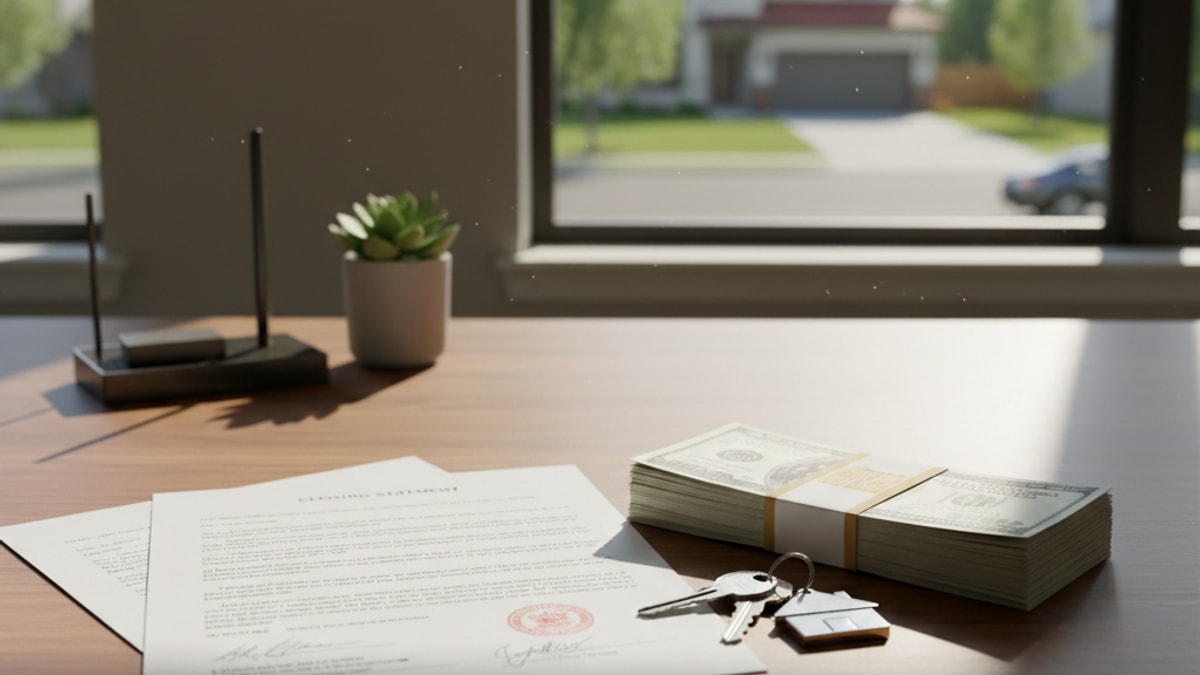
Cash Sale Closing Costs California — What Buyers Actually Pay
Cash buyers in California pay closing costs averaging $3,000–$15,000 on a median-priced home. Significantly less than financed purchases, but not zero. The misconception that all-cash transactions eliminate closing expenses persists because buyers conflate ‘no mortgage’ with ‘no fees.’ The reality: lender-specific charges disappear (loan origination, appraisal, credit report, mortgage insurance), but escrow services, title insurance policies, county transfer taxes, and government recording fees remain mandatory. The spread between $3,000 and $15,000 hinges on three variables: property price (which governs transfer tax calculations and title insurance premiums), whether the buyer purchases owner’s title insurance (optional but recommended), and whether the buyer elects for inspections or other due diligence services not required by law but standard practice among informed purchasers.
Our team has closed hundreds of cash transactions across California counties. The gap between what buyers expect to pay and what they actually pay typically traces back to one source: assuming that ‘cash closes faster’ also means ‘cash closes cheaper.’ Speed and cost are independent variables in California real estate. Cash removes financing contingencies and accelerates timelines, but mandatory closing fees are set by county ordinances and title companies regardless of payment method.
What are the actual closing costs for cash sales in California?
Cash sale closing costs California range from $3,000 to $15,000 depending on purchase price, county transfer tax rates, and optional services. Core mandatory fees include escrow services ($300–$1,500), owner’s title insurance (approximately 0.5–0.7% of purchase price), county transfer taxes ($1.10 per $1,000 in most counties), and recording fees ($50–$150). Unlike financed purchases, cash buyers avoid loan origination fees, appraisal costs, lender’s title insurance, and mortgage insurance. Reducing total closing costs by 60–70% compared to conventional mortgages.
The direct answer is yes. Cash buyers pay closing costs in California, but the structure differs significantly from financed transactions. The common misunderstanding is that ‘all cash’ eliminates third-party fees entirely; the reality is that lender-dependent charges disappear while county-mandated and title-related fees remain. Teams that enter cash negotiations assuming zero costs beyond the purchase price consistently underprepare for final settlement statements. This piece covers the specific line items that appear on every California cash closing statement, the three buyer decisions that determine whether costs land at $3,000 or $15,000, and the two negotiation points where buyers recover portions of these expenses from sellers.
The Core Fee Structure Cash Buyers Actually Pay
Escrow services in California operate as neutral third-party facilitators required by law to manage document execution, fund disbursement, and title transfer. Escrow fees for cash transactions range $300–$1,500 depending on purchase price and whether the escrow company charges flat fees or percentage-based fees. The California Escrow Association reports that most companies use tiered flat-rate structures rather than percentage models, meaning a $500,000 purchase and a $750,000 purchase often incur identical escrow costs if they fall within the same pricing tier. Escrow handles three critical functions: holding the buyer’s earnest money deposit in a trust account until closing conditions are satisfied, coordinating inspections and title searches, and recording the deed with the county recorder’s office after all parties have signed. Without escrow, the buyer has no legal mechanism to ensure the seller actually holds clear title before transferring funds.
Title insurance protects buyers against defects in the property’s ownership history that weren’t discovered during the title search. Prior liens, undisclosed heirs, forgery in the chain of title, errors in public records. California is a simultaneous-issue state, meaning title companies offer both lender’s title insurance (protects the mortgage company) and owner’s title insurance (protects the buyer). Cash buyers skip lender’s coverage since no lender exists, but owner’s coverage remains the single largest closing cost most cash buyers pay. Title insurance premiums are calculated as a percentage of purchase price: 0.5–0.7% depending on the underwriter and county, meaning a $600,000 home generates a $3,000–$4,200 title insurance premium. Unlike homeowner’s insurance, title insurance is a one-time fee paid at closing that provides coverage for as long as the buyer or their heirs hold an interest in the property. We’ve seen buyers attempt to skip owner’s title insurance to reduce closing costs. And later discover a mechanics lien filed by a contractor the seller never paid, which the buyer is now legally obligated to satisfy before selling the property. The $4,000 saved at closing became a $30,000 liability at resale.
County transfer taxes in California are assessed at $1.10 per $1,000 of purchase price at the base state level, with individual counties and cities layering additional transfer taxes on top. Los Angeles County adds $0.45 per $1,000, San Francisco charges $2.50–$3.40 per $1,000 depending on property value, and Oakland imposes a progressive rate structure reaching $15.00 per $1,000 for properties over $2 million. Transfer tax is calculated on the full purchase price, not the loan amount, meaning cash buyers and financed buyers pay identical transfer tax on a $700,000 property. Recording fees charged by county recorders’ offices to officially file the deed and any related documents typically total $50–$150 depending on the number of pages recorded and the county’s fee schedule. These are non-negotiable government fees. Title companies collect them at closing and remit them to the county on the buyer’s behalf.
What Cash Buyers Avoid (and What That Actually Saves)
Loan origination fees charged by mortgage lenders range 0.5–1.0% of the loan amount. On a $500,000 mortgage, that’s $2,500–$5,000 eliminated from the cash buyer’s closing statement. Appraisal fees required by lenders to verify market value typically cost $500–$700 for single-family homes and $1,000+ for multi-unit properties. Cash buyers can skip the appraisal entirely or order one for their own due diligence without lender-specific formatting requirements that inflate costs. Credit report fees ($25–$50), loan processing fees ($300–$500), mortgage insurance premiums (0.5–2.0% of loan amount annually for borrowers with less than 20% equity), and lender’s title insurance (approximately 0.3–0.5% of loan amount) all disappear when no mortgage exists.
The cumulative savings between cash and financed closings on a $600,000 California home: financed buyers pay $12,000–$18,000 in total closing costs (2.0–3.0% of purchase price), while cash buyers pay $5,000–$8,000 (0.8–1.3% of purchase price). A reduction of $7,000–$10,000 attributable entirely to eliminated lender fees. That spread widens on higher-priced properties where percentage-based lender fees scale with loan amounts. The critical distinction: cash buyers reduce closing costs by 60–70%, but they do not eliminate closing costs. Teams that budget zero for settlement expenses consistently face funding shortfalls at the closing table, which delays settlement or requires last-minute wire transfers that trigger bank holds and multi-day processing delays.
Cash Sale Closing Costs California: Cost Comparison
| Fee Category | Financed Purchase Cost | Cash Purchase Cost | Who Pays in Cash Sale | Bottom Line Assessment |
|---|---|---|---|---|
| Escrow Services | $300–$1,500 | $300–$1,500 | Buyer or split per agreement | Mandatory. No avoidance mechanism exists in California |
| Owner’s Title Insurance | $3,000–$5,000 (0.5–0.7% of price) | $3,000–$5,000 (0.5–0.7% of price) | Buyer or seller per local custom | Optional but eliminates title defect liability. Skipping this exposes buyers to unlimited financial risk |
| Lender’s Title Insurance | $1,800–$3,000 (0.3–0.5% of loan) | $0 (no lender) | Not applicable | Cash buyer saves this cost entirely |
| County Transfer Tax | $1.10/1,000 + local add-ons | $1.10/1,000 + local add-ons | Seller in most counties, buyer in some | Non-negotiable government fee. Cash status irrelevant |
| Loan Origination Fee | $2,500–$5,000 (0.5–1.0% of loan) | $0 (no loan) | Not applicable | Cash buyer saves this cost entirely |
| Appraisal Fee | $500–$1,000 | $0 (optional) | Not applicable | Cash buyers can skip or order for diligence only |
| Recording Fees | $50–$150 | $50–$150 | Buyer | Mandatory county fee. No reduction mechanism |
| Home Inspection | $400–$600 | $400–$600 | Buyer (optional) | Negotiable service. Skipping it means buying blind |
| Total Range | $12,000–$18,000 | $5,000–$8,000 | N/A | Cash saves 60–70% of closing costs by eliminating lender fees. But mandatory fees remain |
What If: Cash Sale Closing Scenarios
What If the Seller Offers to Cover My Closing Costs?
Accept the offer and verify the specific fees covered in writing within the purchase agreement. ‘seller pays closing costs’ without itemization creates ambiguity that escrow companies resolve in the seller’s favor. Sellers offering to cover buyer closing costs typically increase the purchase price by an equivalent amount to preserve their net proceeds, meaning the buyer finances the concession through a higher sale price rather than receiving a genuine discount. In cash transactions, this structure makes less sense because the buyer isn’t amortizing the cost increase over 30 years. The inflated price is paid upfront. Negotiate instead for a purchase price reduction equal to the closing cost amount, which lowers the property tax basis (assessed value) and reduces future annual property tax liability under Proposition 13’s 1% base rate. A $5,000 price reduction saves $50 annually in property taxes in perpetuity, compounding to $1,500 over 30 years before accounting for inflation adjustments.
What If I’m Buying a Property in a High-Transfer-Tax County?
Budget transfer taxes as a separate line item before submitting an offer. San Francisco’s tiered transfer tax structure reaches $34 per $1,000 (3.4% of purchase price) for properties over $25 million, meaning a $30 million cash purchase generates $1,020,000 in transfer tax alone. Buyers in high-transfer-tax jurisdictions sometimes negotiate for the seller to cover the full transfer tax burden since California law designates transfer tax as a seller obligation in most counties unless the purchase agreement specifies otherwise. This negotiation is most effective in buyer’s markets where inventory exceeds demand and sellers are motivated to close quickly. Document the agreed allocation in Section 12 of the California Residential Purchase Agreement (transfer tax allocation clause). Verbal agreements on tax responsibility are unenforceable once escrow opens.
What If I Want to Skip Owner’s Title Insurance to Save Money?
Reconsider. Owner’s title insurance is the only closing cost that protects your ownership interest for the entire duration you hold the property. Title defects that weren’t discovered during the title search surface years after closing: mechanics liens filed by contractors the seller stiffed, easements granted to utility companies that weren’t recorded properly, boundary disputes with neighbors based on conflicting surveys, or ownership claims by heirs of prior owners whose estate was never properly probated. Without owner’s title insurance, you pay the full cost to resolve these defects. Litigation, settlement payments, survey corrections, or quitclaim deeds. A mechanics lien filed for $20,000 of unpaid work becomes your liability to clear before selling, and the contractor can foreclose on the property to satisfy the debt. The $4,000 premium you saved at closing just became a $20,000+ expense with no recovery mechanism. We’ve never seen a scenario where skipping title insurance was the correct financial decision for a buyer who held the property longer than three years.
The Blunt Truth About Cash Closings and Costs
Here’s the honest answer: cash buyers don’t eliminate closing costs in California. They eliminate lender fees. If you enter a cash transaction expecting to pay only the purchase price and property taxes, you’ll face a $5,000–$8,000 funding gap at closing that delays settlement and weakens your negotiating position. Sellers view cash offers as faster and more certain than financed offers because cash removes appraisal and loan approval contingencies. Not because cash is cheaper for the buyer. The certainty premium cash buyers command in competitive markets (the ability to win bids against financed buyers offering identical prices) stems entirely from speed and reliability, not from cost savings. Teams that budget zero for cash closing costs misunderstand the transaction structure and consistently underfund escrow accounts, which triggers settlement delays that erase the speed advantage cash was supposed to deliver. The $7,000 you save by avoiding lender fees is real. But it’s not the same as paying zero.
Key Takeaways
- Cash sale closing costs California range $3,000–$15,000 depending on purchase price, county transfer tax rates, and optional services like inspections and surveys.
- Core mandatory fees include escrow services ($300–$1,500), owner’s title insurance (0.5–0.7% of price), county transfer taxes ($1.10 per $1,000 base rate plus local add-ons), and recording fees ($50–$150).
- Cash buyers eliminate lender-specific fees. Loan origination, appraisal, credit report, lender’s title insurance, mortgage insurance. Reducing total closing costs by 60–70% compared to financed purchases.
- Owner’s title insurance is optional but eliminates liability for title defects like undisclosed liens, boundary disputes, or ownership claims that surface after closing.
- Transfer tax allocation is negotiable in California. Buyers in high-transfer-tax counties should specify seller responsibility in the purchase agreement to avoid unexpected five-figure tax bills at closing.
- Skipping owner’s title insurance to save $3,000–$5,000 at closing exposes buyers to unlimited financial liability for title defects that can exceed $20,000 to resolve.
Cash transactions close faster because they remove financing contingencies. Not because they’re cheaper. Budget closing costs as 0.8–1.3% of purchase price before submitting an offer, and verify in writing which party covers transfer taxes and title insurance premiums. The misconception that cash means ‘no closing costs’ consistently produces underfunded escrow deposits and delayed settlements. Have questions about structuring your cash offer? Our team walks buyers through actual closing cost projections before the purchase agreement is signed. So the final settlement statement contains no surprises.
Frequently Asked Questions
How much are closing costs for a cash buyer in California?
Cash buyers in California pay $3,000–$15,000 in closing costs depending on purchase price and optional services. Core fees include escrow services ($300–$1,500), owner’s title insurance (0.5–0.7% of price), county transfer taxes ($1.10 per $1,000 base plus local add-ons), and recording fees ($50–$150). Cash buyers eliminate lender-specific fees like loan origination, appraisal, and mortgage insurance, reducing total closing costs by 60–70% compared to financed purchases.
Do cash buyers pay transfer taxes in California?
Yes — California transfer taxes apply to all property sales regardless of payment method. The base state rate is $1.10 per $1,000 of purchase price, with individual counties and cities adding their own rates on top. San Francisco charges $2.50–$34.00 per $1,000 depending on property value, while Los Angeles adds $0.45 per $1,000. Transfer tax allocation is negotiable, but buyers should verify in writing who pays before signing the purchase agreement.
Can I skip title insurance if I’m paying cash in California?
You can skip owner’s title insurance, but doing so exposes you to unlimited liability for title defects that weren’t discovered during the title search — mechanics liens, boundary disputes, undisclosed heirs, or recording errors. Without coverage, you pay the full cost to resolve these issues, which often exceeds $20,000. Lender’s title insurance isn’t required for cash buyers since no mortgage exists, but owner’s title insurance protects your equity for as long as you hold the property.
What closing costs do cash buyers avoid in California?
Cash buyers eliminate all lender-dependent fees: loan origination ($2,500–$5,000), appraisal ($500–$1,000), credit report ($25–$50), loan processing ($300–$500), lender’s title insurance (0.3–0.5% of loan amount), and mortgage insurance (0.5–2.0% annually for under-20% equity). This saves $7,000–$10,000 on a $600,000 property. Mandatory fees like escrow, owner’s title insurance, transfer taxes, and recording fees remain regardless of payment method.
Who pays closing costs in a California cash sale?
Closing cost allocation is negotiable in California purchase agreements. By custom, buyers typically pay escrow fees, owner’s title insurance, and recording fees, while sellers pay transfer taxes and real estate commissions. In practice, buyers and sellers can agree to any split — some sellers offer to cover all buyer closing costs in exchange for a higher purchase price, while buyers in competitive markets accept responsibility for all fees to strengthen their offers.
How do California cash closing costs compare to other states?
California’s cash closing costs are higher than most states due to elevated title insurance premiums (0.5–0.7% versus 0.3–0.5% nationally) and local transfer taxes that exceed $10 per $1,000 in some jurisdictions. Texas has no state transfer tax, while New York charges $2.00–$4.00 per $1,000. Recording fees and escrow costs are comparable nationwide, but California’s Proposition 13 property tax structure means the purchase price directly sets the annual tax basis, making closing cost negotiations more financially significant than in states with frequent reassessments.
When do I pay cash sale closing costs in California?
Cash buyers pay closing costs at the settlement date when escrow closes and the deed transfers. Buyers wire funds to the escrow company 1–2 business days before the scheduled closing date — the wire must include the purchase price plus all closing costs and prorated property taxes. Escrow disburses these funds to the seller, title company, county recorder, and service providers on closing day after all parties sign final documents.
Are cash sale closing costs tax-deductible in California?
Most cash closing costs are not tax-deductible under current federal tax law. Property taxes prorated at closing are deductible in the year paid, but escrow fees, title insurance, recording fees, and transfer taxes are not deductible as current expenses. Some closing costs can be added to the property’s cost basis for capital gains calculation when you sell — consult a tax professional for specifics, as tax treatment depends on whether the property is a primary residence, rental, or investment.
What happens if I underfund my escrow account for a cash closing?
Underfunding delays closing until you wire additional funds to cover the shortfall. Escrow companies require all funds to clear before releasing the deed, and wire transfers take 1–3 business days to process depending on bank policies. If your closing date is contractually binding, delays can trigger penalty clauses or allow the seller to cancel the agreement and retain your earnest money deposit. Always wire 2–5% more than the estimated closing costs to account for prorated taxes and last-minute adjustments — escrow refunds unused funds after closing.
Do I need a real estate attorney for a cash closing in California?
California does not require attorney representation for real estate transactions — escrow officers and title companies handle document preparation, fund disbursement, and deed recording. Attorneys are optional but useful for complex transactions involving trusts, partnerships, 1031 exchanges, or disputes over contract terms. Attorney fees for transaction review range $1,500–$3,000, which adds to closing costs but provides legal protection against contract ambiguities that escrow officers can’t advise on.
