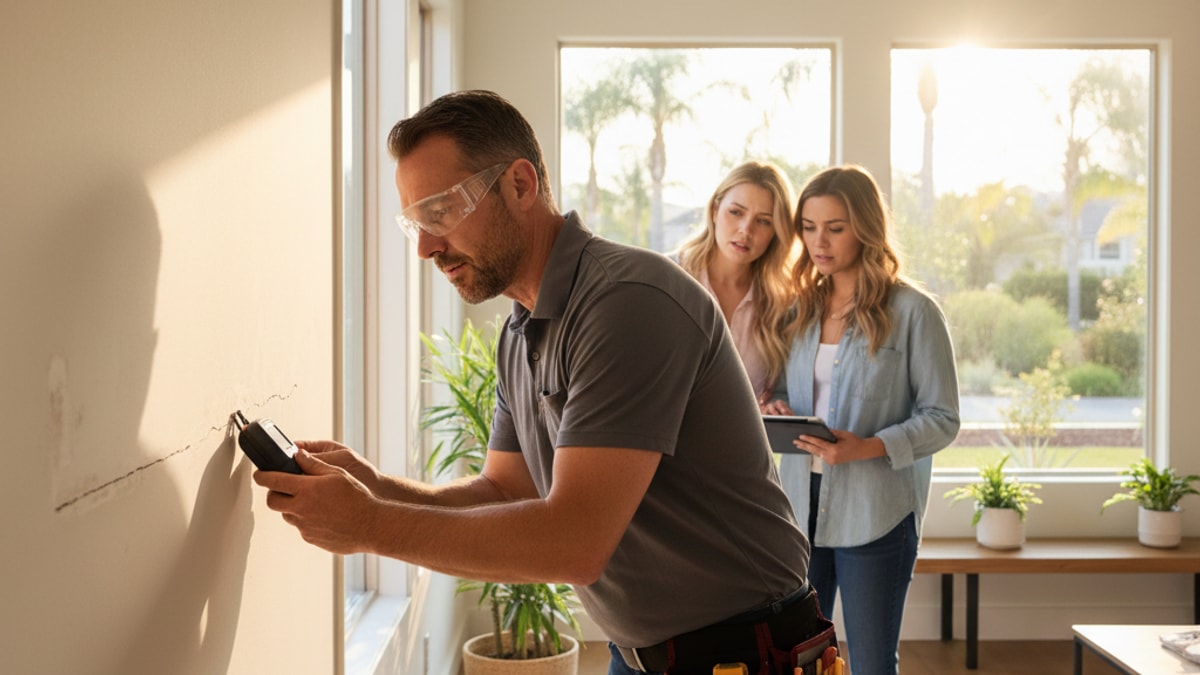
Between 2004 and 2008, when housing construction in California hit record volumes and domestic drywall supplies couldn’t keep pace, contractors turned to imports. And roughly 550 million square feet of defective Chinese-manufactured drywall entered U.S. homes before the problem was identified. By 2009, the Consumer Product Safety Commission (CPSC) had documented cases across 42 states, with Florida, Louisiana, Mississippi, Alabama, and Virginia bearing the heaviest concentration. California saw fewer reported cases than Gulf Coast states, but homes built or remodeled during the 2004–2009 window using imported gypsum board remain at risk. The defective material off-gasses hydrogen sulfide and other sulfur compounds that corrode copper wiring, blacken silver fixtures, destroy HVAC coils, and trigger respiratory distress. And the contamination doesn’t stop until every sheet is removed.
Our team at Home Helpers has worked across enough property transactions in California to see the pattern clearly: homeowners who discover chinese drywall house california issues mid-transaction face deal collapse, buyer walkaway clauses, and lender refusal to finance. The gap between identifying the problem and resolving it isn’t just financial. It’s structural. A contaminated house isn’t habitable until remediation is complete, and remediation isn’t complete until every affected system is replaced.
What is Chinese drywall and why does it damage California homes?
Chinese drywall refers to gypsum wallboard manufactured in China between 2001 and 2009 that contains elevated levels of elemental sulfur and strontium sulfide. When exposed to heat and humidity, these compounds off-gas hydrogen sulfide, carbonyl sulfide, and carbon disulfide. Corrosive gases that attack copper wiring, air conditioning coils, and any metal surface in the home. The CPSC’s 2011 final report identified specific manufacturers whose products consistently exhibited this defect, including Knauf Plasterboard Tianjin and several others operating under variable brand names during the import surge.
The misconception most California sellers hold is that the problem was limited to Gulf Coast states with high humidity. That’s incomplete. The off-gassing accelerates in humid environments, but it occurs in any climate where indoor temperatures exceed 70°F for extended periods. Which describes every occupied California home. This article covers the specific identification methods that distinguish defective drywall from safe material, the remediation scope required to restore habitability, and the disclosure obligations California sellers face under Civil Code § 1102.
Identifying Chinese Drywall in Your California Property
Visual inspection alone cannot confirm chinese drywall house california contamination. The defect is chemical, not structural. However, several observable indicators warrant professional testing. Blackened or corroded copper wiring behind outlet plates is the most reliable visual marker. Remove a single outlet cover and inspect the bare copper ground wire. If it’s turned black or gray rather than maintaining its natural copper color, sulfur corrosion is present. Air conditioning coil failure within 18–36 months of installation, particularly when the coils show pitting or black residue, is a secondary indicator. A persistent sulfur or rotten-egg odor, especially in closed rooms or after the home has been sealed for several hours, suggests active off-gassing.
Manufacturer markings on the drywall itself provide direct evidence. Access an attic space, garage, or unfinished area where the back of installed drywall is visible. Chinese-manufactured board imported during the defect window often bears stamps indicating country of origin. “Made in China” or manufacturer names including Knauf Tianjin, Taishan Gypsum, or BNBM. However, not all Chinese drywall is defective, and not all defective board is clearly marked. Laboratory testing via Environmental Health & Engineering (EH&E) or a CPSC-recognized lab remains the only definitive confirmation method. A chamber test measures sulfur gas emissions from a drywall sample under controlled temperature and humidity. Results above 10 parts per billion hydrogen sulfide indicate a contaminated product.
Home Helpers recommends testing before listing any California property built or remodeled between 2004 and 2009. The cost of a chamber test ranges from $150 to $500 per sample, and two samples (from different rooms or floors) provide statistically meaningful coverage for a single-family home. Waiting until a buyer’s inspector flags the issue mid-transaction eliminates negotiating leverage and guarantees deal complications.
The Remediation Process: What Complete Removal Requires
Remediation of chinese drywall house california contamination is not a repair. It’s a gut-and-rebuild process. The CPSC’s 2011 guidance specifies that all defective drywall must be removed and replaced, along with all electrical wiring, all HVAC components (ductwork, coils, air handlers), all affected plumbing fixtures, and any other corroded metal systems. Partial remediation. Replacing only the visibly damaged drywall or only the failed HVAC system. Does not resolve the contamination because residual sulfur compounds remain in the building envelope and continue off-gassing.
A complete remediation sequence begins with occupant relocation. The home is not habitable during the work. All furniture, personal belongings, and soft goods are removed to prevent cross-contamination. Drywall removal follows, requiring full demolition to studs in every affected room. Electrical wiring is stripped to the panel and replaced entirely; copper wiring exposed to sulfur gases loses conductivity and poses a fire risk even if visually intact. HVAC systems are removed in their entirety. Coils, ductwork, registers, and air handlers. Insulation in contact with the drywall is typically replaced as well, as sulfur gases permeate porous materials.
Once the structure is stripped to framing, surfaces are cleaned using HEPA filtration and odor-neutralising agents to remove residual sulfur deposits. New drywall. Domestically sourced and tested to confirm low sulfur content. Is installed, followed by new electrical systems, new HVAC installation, and interior finishes. The timeline for a 2,000-square-foot home ranges from 8 to 16 weeks depending on permitting, contractor availability, and the extent of electrical and HVAC replacement required. Cost depends on home size and contamination scope, but the CPSC’s case studies document remediation expenses between $15,000 and $150,000 for single-family homes, with California’s higher labor and permitting costs pushing most projects into the $50,000–$100,000+ range.
California Disclosure Law and Seller Liability
California Civil Code § 1102 requires sellers to disclose any material facts affecting property value or desirability. Chinese drywall contamination is a material fact. It renders the property uninhabitable until remediated, eliminates most financing options, and reduces market value by the full cost of remediation plus a stigma discount. Failure to disclose known contamination exposes the seller to rescission (the buyer can unwind the transaction and recover all costs) and potentially punitive damages if the non-disclosure is found to be intentional.
The disclosure obligation is triggered by actual knowledge or circumstances that would prompt a reasonable person to investigate. If you observed blackened wiring, recurring HVAC failures, or sulfur odors and chose not to test, a court may impute knowledge. If remediation was performed by a prior owner and you received documentation of the work, you must disclose both the prior contamination and the remediation scope. If testing confirmed contamination and you completed full remediation per CPSC guidelines, you must still disclose the historical presence of defective drywall. Buyers have a right to know the property’s material history even if the defect has been corrected.
Contact Home Helpers Group to discuss your property and request a no-obligation cash offer.
Chinese Drywall House California: Full Comparison
| Indicator | Defective Chinese Drywall (2004–2009 Import) | Domestic Drywall (U.S./Canada Manufactured) | Post-Remediation Status | Professional Assessment |
|---|---|---|---|---|
| Sulfur Content | Elevated elemental sulfur and strontium sulfide. Off-gasses hydrogen sulfide at >10 ppb in chamber testing | Trace sulfur only. Emissions <2 ppb under identical test conditions | Returns to baseline if all contaminated material removed and tested post-remediation | Chamber test by CPSC-recognized lab is the only definitive differentiation method. Visual inspection alone cannot confirm |
| Corrosion Pattern | Blackened copper wiring, pitted HVAC coils, tarnished silver fixtures within 12–36 months of installation | No corrosion under normal indoor conditions; metal maintains original appearance across 10+ year lifespan | No new corrosion if remediation included full electrical and HVAC replacement | Active corrosion indicates ongoing contamination; absence of new corrosion post-remediation confirms successful removal |
| Odor | Persistent sulfur or rotten-egg smell, especially in closed or low-airflow spaces after home sealed 6+ hours | No chemical odor; standard new-construction or aged-home smell only | Odor eliminated if all defective drywall removed. Residual odor indicates incomplete remediation | Odor test (seal home, test after 24 hours) post-remediation verifies air quality but does not replace lab testing |
| Market Impact | Unsellable to financed buyers; cash-only market at 40–60% discount to comparable homes; lender refusal standard | Standard marketability; no disclosure or financing barriers | Restored to standard marketability if remediation documented and disclosed; 10–15% stigma discount persists in some markets | Transparent disclosure of remediation with third-party verification restores most market value; non-disclosure guarantees transaction failure |
| Legal Disclosure Requirement (California) | Material fact requiring disclosure under Civil Code § 1102 whether remediated or not | No disclosure required for standard construction materials | Prior contamination and completed remediation both must be disclosed; omission creates rescission liability | Disclosure protects seller from post-close claims; non-disclosure exposes seller to rescission, damages, and attorney fee awards |
Key Takeaways
- Chinese drywall imported to California between 2004 and 2009 off-gasses hydrogen sulfide and other corrosive sulfur compounds that destroy copper wiring, HVAC coils, and metal fixtures. The contamination does not resolve until every affected sheet is removed.
- Visual indicators include blackened copper wiring behind outlet plates, corroded air conditioning coils, and persistent sulfur odors, but only a chamber test by a CPSC-recognized lab definitively confirms contamination.
- Complete remediation requires removal of all defective drywall, all electrical wiring, all HVAC components, and all corroded systems. Partial replacement does not eliminate ongoing off-gassing and corrosion.
- Remediation costs for California homes range from $50,000 to $100,000+ depending on square footage and contamination scope, with timelines spanning 8 to 16 weeks from demolition to final finishes.
- California Civil Code § 1102 requires sellers to disclose known chinese drywall house california contamination as a material fact. Failure to disclose exposes the seller to transaction rescission and damages even if remediation was completed.
- Homes with documented contamination and no remediation are effectively unsellable to financed buyers; cash buyers demand 40–60% discounts reflecting full remediation cost plus stigma.
- Post-remediation properties with transparent disclosure and third-party verification restore most market value, though a 10–15% stigma discount may persist depending on local buyer sensitivity.
What If: Chinese Drywall House California Scenarios
What If I’m Selling a Home Built in 2006 and a Buyer’s Inspector Finds Blackened Wiring?
Order an immediate chamber test through a CPSC-recognized lab. Do not wait for the buyer to escalate. If the test confirms contamination, you have two options: remediate the property before close (which extends the timeline and may require renegotiating the contract), or agree to a price reduction reflecting the buyer’s remediation cost plus a 15–25% stigma discount. Most buyers will walk rather than assume remediation risk, so the path that preserves the transaction is full remediation with documentation before close. If the test returns negative. Meaning the wiring corrosion has a different cause. Provide the lab report to the buyer and address the electrical issue as a standalone repair.
What If I Completed Remediation in 2012 — Do I Still Have to Disclose?
Yes. California law requires disclosure of material facts affecting property value or desirability, and historical contamination qualifies even after successful remediation. Include the full timeline in your disclosure: the year contamination was identified, the scope of remediation performed, the name of the contractor who completed the work, and copies of any lab reports or certifications confirming that new drywall meets CPSC standards. Buyers have a right to know the property’s material history. And transparent disclosure with documentation consistently results in smoother transactions than omission followed by discovery.
What If I Suspect Contamination but Haven’t Tested — Should I Test Before Listing?
Test before listing. The cost of a chamber test is $150–$500; the cost of a collapsed transaction after a buyer discovers contamination mid-escrow is the entire remediation expense plus lost time, price reductions, and potential legal liability for non-disclosure. If testing confirms contamination, you control the remediation timeline and can complete the work before marketing the property. If testing returns negative, you eliminate buyer concerns and can list with confidence. Waiting until a buyer’s inspector flags the issue eliminates all negotiating leverage and guarantees complications.
The Unflinching Truth About Chinese Drywall in California
Here’s the honest answer: most California homeowners who discover chinese drywall house california contamination in their property attempt to minimize the problem or avoid testing altogether, hoping the issue won’t surface during a sale. That strategy fails 100% of the time. A competent buyer’s inspector will identify blackened wiring or corroded HVAC components within the first hour of a standard inspection, and the moment those indicators appear in an inspection report, your transaction is dead unless you can produce a clean lab test or documented evidence of complete remediation. The market for contaminated homes is cash buyers at 40–60% discounts. And even cash buyers will demand lab confirmation and price concessions reflecting full remediation cost. The only path that preserves market value is proactive testing, transparent disclosure, and complete remediation with third-party verification before you list.
California’s housing stock contains far fewer chinese drywall house california cases than Gulf Coast states, but the homes that are contaminated face identical remediation requirements and identical market consequences. The defect doesn’t resolve on its own. Sulfur compounds continue off-gassing for decades until the source material is removed. Partial remediation. Replacing only the drywall but leaving contaminated wiring in place, or replacing only the HVAC but leaving defective wallboard. Does not eliminate the problem and creates a false sense of security that fails the moment a new inspector reviews the property. If testing confirms contamination, the only compliant, market-preserving response is full remediation per CPSC guidelines: all drywall out, all wiring out, all HVAC out, structure cleaned, new systems installed, third-party verification completed.
The longer you wait, the worse the outcome. Corrosion accelerates over time. Electrical systems degrade. HVAC efficiency drops. And every month you delay testing is another month the contamination compounds and the remediation bill grows.
If you’re holding a property built or remodeled between 2004 and 2009 and you’ve observed any of the visual indicators. Blackened wiring, recurring HVAC failures, sulfur odors. Contact Home Helpers at homehelpersgroup.devonsprague.us/ to discuss your options. We work with California homeowners navigating disclosure requirements, remediation decisions, and transaction strategies when material defects surface. The worst outcome isn’t discovering contamination. It’s discovering it mid-transaction without a remediation plan or legal strategy in place.
Frequently Asked Questions
How do I know if my California home contains Chinese drywall?
The most reliable visual indicator is blackened or gray copper wiring behind outlet plates — remove a single outlet cover and inspect the bare ground wire for corrosion. Additional signs include air conditioning coil failure within 18–36 months, persistent sulfur or rotten-egg odors, and manufacturer markings on drywall indicating Chinese origin (visible in attics or unfinished spaces). However, only a chamber test by a CPSC-recognized lab definitively confirms contamination by measuring sulfur gas emissions under controlled conditions.
Can I sell a California house with Chinese drywall without disclosing it?
No. California Civil Code § 1102 requires sellers to disclose any material fact affecting property value or desirability, and Chinese drywall contamination qualifies as a material fact whether remediated or not. Failure to disclose known contamination exposes you to transaction rescission, damages, and attorney fees. Even if you completed remediation, you must disclose the historical presence of defective drywall and provide documentation of the remediation scope.
What does Chinese drywall remediation cost in California?
Complete remediation for a California home typically ranges from $50,000 to $100,000+ depending on square footage and contamination scope. The work requires removal of all defective drywall, all electrical wiring, all HVAC components (ductwork, coils, air handlers), and all corroded systems, followed by cleaning, new material installation, and third-party verification. Partial remediation does not eliminate ongoing contamination and is not compliant with CPSC guidelines.
Who is liable if I buy a California home and later discover Chinese drywall?
If the seller knew or should have known about the contamination and failed to disclose it, the seller is liable for rescission (unwinding the transaction) and damages covering remediation costs, temporary housing, and legal fees. If the seller genuinely had no knowledge and the contamination was not discoverable through reasonable inspection, liability becomes more contested — but California courts generally favor buyers in non-disclosure disputes involving material defects.
Is Chinese drywall remediation covered by homeowners insurance in California?
Most standard homeowners insurance policies exclude coverage for Chinese drywall remediation because the damage is classified as a product defect or construction defect rather than a covered peril like fire or water damage. Some affected homeowners have recovered costs through lawsuits against manufacturers, distributors, or builders, but insurance coverage is rare. Review your policy’s exclusions and consult an attorney if you’re pursuing a claim against a third party.
How long does Chinese drywall remediation take in California?
A complete remediation for a 2,000-square-foot home typically takes 8 to 16 weeks from demolition to final finishes, depending on permitting timelines, contractor availability, and the scope of electrical and HVAC replacement required. The home is not habitable during remediation — occupants must relocate for the duration of the work. Partial or phased remediation is not recommended because it does not eliminate ongoing contamination.
Can I finance a California home with known Chinese drywall contamination?
Most conventional lenders refuse to finance homes with known Chinese drywall contamination until remediation is complete and verified by third-party testing. FHA and VA loans are similarly unavailable for contaminated properties. Cash buyers are the primary market for unremediated homes, and those buyers typically demand 40–60% discounts reflecting full remediation cost plus stigma. Post-remediation properties with documented verification restore standard financing eligibility.
What is the difference between Chinese drywall and domestic drywall?
Chinese drywall manufactured between 2001 and 2009 contains elevated levels of elemental sulfur and strontium sulfide that off-gas hydrogen sulfide and other corrosive compounds when exposed to heat and humidity. Domestic drywall (U.S. and Canadian manufactured) contains only trace sulfur and does not emit corrosive gases under normal indoor conditions. The difference is detectable only through lab testing — visually, the materials are indistinguishable.
What happens if I only replace the Chinese drywall but leave the old wiring and HVAC?
Partial remediation does not eliminate contamination. Copper wiring and HVAC components exposed to sulfur gases retain sulfur deposits and continue corroding even after the drywall is removed. The CPSC’s 2011 guidance requires removal of all defective drywall and all affected systems — wiring, HVAC, and corroded fixtures — to fully resolve the contamination. Leaving contaminated systems in place guarantees ongoing corrosion and fails future inspections.
Are there any California-specific regulations or resources for Chinese drywall remediation?
California follows the CPSC’s federal guidelines for identification and remediation but does not maintain a state-specific registry or remediation program. The California Department of Public Health and the California Contractors State License Board provide general guidance, but remediation standards are set at the federal level. Homeowners pursuing legal claims may reference California Civil Code § 1102 (seller disclosure requirements) and California’s construction defect statutes for builder liability.
