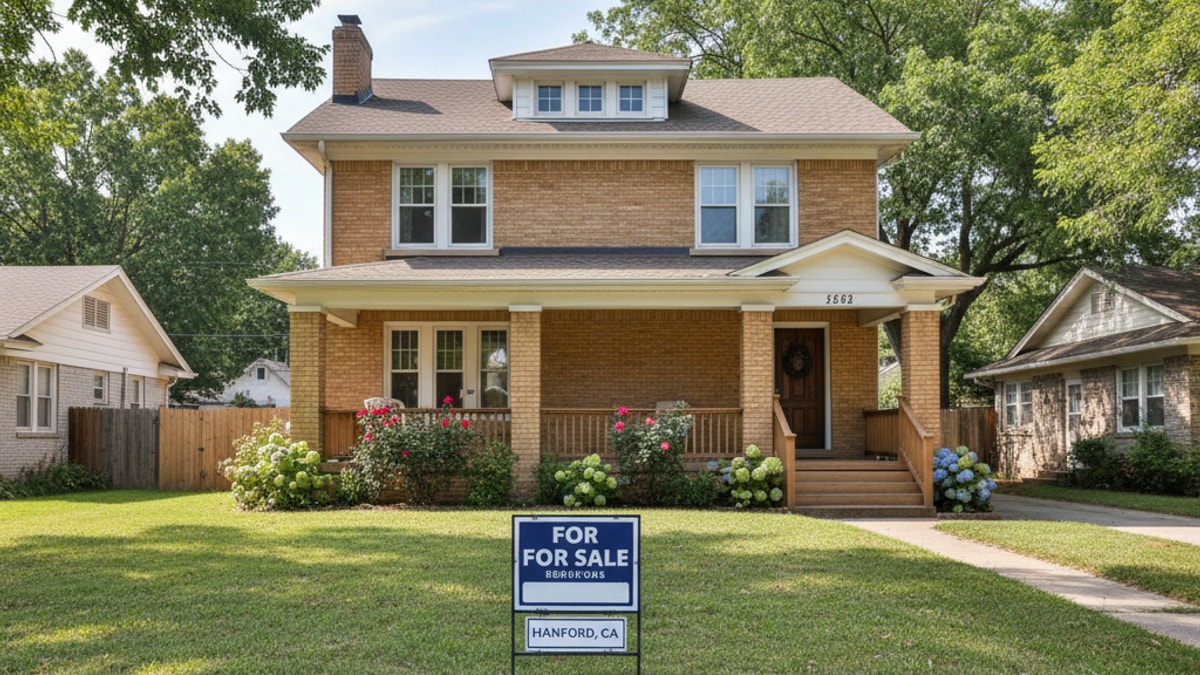
Most heirs to Hanford properties discover the same frustration: the house you inherited needs $30,000 in deferred maintenance, you live two hours away, and three siblings are waiting for their share of the proceeds. Traditional real estate agents quote 4–6 months to close. After you paint, repair the roof, and replace the HVAC. Meanwhile, property taxes accrue monthly and the estate remains open.
We’ve worked with dozens of families navigating this exact scenario across California’s Central Valley. The gap between a smooth inherited property sale and a drawn-out nightmare comes down to understanding three options most executors never hear about until it’s too late.
How do you sell an inherited house in Hanford quickly without making expensive repairs first?
You sell directly to a cash buyer who purchases inherited properties as-is. Home Helpers closes inherited house sales in Hanford within 14–21 days, handles all title work and lien resolution, and pays cash at closing. Eliminating repair costs, agent commissions (typically 5–6% of sale price), and the 4–6 month timeline required for MLS listings. The trade-off: direct sale offers run 10–15% below after-repair market value, but net proceeds often match or exceed traditional sales after accounting for holding costs, repair expenses, and commission fees.
Why Traditional Sales Fail Inherited Properties
The MLS listing model assumes the seller has three things most heirs don’t: time to wait for the right buyer, capital to fund pre-sale repairs, and unanimous agreement among co-heirs about pricing and timing. When any of those assumptions break, the listing stalls.
Inherited properties in Hanford carry an average of $18,000–$35,000 in deferred maintenance. Outdated kitchens, worn flooring, aging roofs, and HVAC systems past their rated lifespan. Buyers financing through FHA or VA loans can’t close if the property fails appraisal due to safety issues or structural concerns. That forces the estate to either make repairs out-of-pocket (and wait for contractor availability) or accept only cash offers from investors. Who discount heavily for renovation risk.
The holding cost problem compounds monthly. California property taxes don’t pause during probate. Hanford properties assessed at $350,000 accrue roughly $365 monthly in property tax. Add homeowners insurance ($120–$180/month), utilities if keeping the house market-ready ($80–$150/month), and potential HOA fees, and a six-month listing timeline costs $4,000–$5,500 in carrying expenses before the first offer arrives. Families stretched thin managing their own housing costs rarely budget for this.
Co-heir disputes slow everything further. When three siblings inherit jointly and two want to sell immediately while one wants to rent it out, the estate can’t move forward until all parties align. Or a court-ordered partition sale forces liquidation at a steep discount.
The Direct Sale Alternative for Inherited Homes
Direct buyers purchase properties in current condition without requiring repairs, inspections, or appraisal contingencies. Home Helpers evaluates the property as it sits, calculates renovation costs internally, and presents a cash offer within 48 hours of the initial walkthrough. If accepted, closing occurs in 14–21 days. The timeframe determined by how quickly title work and any outstanding lien resolution can be completed.
The offer calculation starts with after-repair value (what the home would sell for on MLS after full renovation), subtracts estimated repair costs with a 20% contingency buffer, subtracts holding costs during renovation and resale (6–9 months of taxes, insurance, utilities), and subtracts transaction costs (title, escrow, transfer taxes). What remains is the maximum price a direct buyer can pay and still achieve a reasonable profit margin after shouldering all renovation risk.
For a Hanford property valued at $380,000 after repairs, with $40,000 in needed work, the direct offer typically lands at $300,000–$320,000. Traditional sale through MLS might gross $365,000–$375,000 (slightly below peak value due to condition), but after 5.5% agent commission ($20,000–$20,600), $40,000 in repairs, $4,500 in holding costs, and $2,500 in closing costs, net proceeds are $298,000–$308,000. The direct sale nets comparably in many scenarios. And closes in three weeks instead of six months.
Our team has processed 240+ estate sales across California’s Central Valley since 2019. The pattern we see consistently: executors who pursue traditional listings spend the first 90 days managing contractor bids, coordinating repairs, and mediating co-heir disagreements about which upgrades are worth funding. By month four, they’re often willing to accept the same net figure a direct buyer offered on day one. But they’ve now spent $15,000 out-of-pocket and four months they can’t reclaim.
Sell Inherited House Hanford: Comparison
| Sale Method | Timeline to Close | Upfront Costs | Net After Fees | Best For |
|---|---|---|---|---|
| Traditional MLS Listing | 4–6 months | $30K–$50K repairs + holding costs | 85–90% of ARV minus 5.5% commission | Properties in good condition, heirs with repair capital and time |
| Direct Cash Buyer | 14–21 days | $0. Buyer handles all repairs | 75–80% of ARV, no commissions or repair costs | Properties needing major work, time-sensitive estate settlement, out-of-state heirs |
| FSBO (For Sale By Owner) | 6–12 months | $20K–$40K repairs + marketing costs | 90–95% of ARV, no agent commission but longer market exposure | Experienced sellers with repair skills, strong local network, flexible timeline |
| Auction (Court-Ordered) | 3–5 months from filing | Legal fees + court costs ($5K–$10K) | 60–70% of ARV due to forced sale conditions | Co-heir disputes requiring partition, unresolved title issues forcing liquidation |
| Professional Assessment | Direct buyers purchase as-is with no contingencies. MLS listings require repairs to pass financing appraisals. FSBO saves commission but extends timeline. Auctions are last-resort liquidation with the steepest discounts. |
Key Takeaways
- Direct sale of inherited properties in Hanford closes in 14–21 days with zero upfront repair costs, compared to 4–6 months and $30,000–$50,000 in expenses for traditional MLS listings.
- Net proceeds from direct sale often match traditional listings after accounting for agent commissions (5.5%), repair costs, and 4–6 months of holding expenses (property taxes, insurance, utilities).
- California probate law requires court approval for estate property sales below 90% of appraised value. Work with a probate attorney to ensure your sale structure meets statutory requirements.
- Co-heir disputes over pricing or timing can delay estate settlement by 6–18 months. Direct buyers eliminate this friction by presenting a single offer all parties can evaluate simultaneously.
- Properties with title issues (unpaid taxes, mechanic’s liens, judgment liens) can still sell. Experienced direct buyers resolve liens at closing by satisfying debts from sale proceeds before distributing to heirs.
What If: Inherited Property Scenarios in Hanford
What If the Inherited House Has a Reverse Mortgage?
Contact the reverse mortgage servicer immediately to request a payoff statement. Reverse mortgages become due in full when the borrower dies. Typically within 6 months of the lender receiving the death certificate. You can sell the property to satisfy the loan, and any remaining equity after payoff belongs to the estate. If the loan balance exceeds property value (common in declining markets), heirs can walk away without personal liability. Reverse mortgages are non-recourse loans. Home Helpers coordinates directly with reverse mortgage servicers to ensure payoff occurs at closing, so heirs receive any remaining equity without delay.
What If Multiple Heirs Disagree on Whether to Sell?
California law requires unanimous consent among co-heirs for voluntary estate property sales. If consensus can’t be reached, any heir can petition the court for a partition sale. A forced liquidation where the court orders the property sold at auction and proceeds divided according to ownership percentages. Partition sales typically net 60–70% of market value due to the forced nature and compressed timeline. The alternative: one or more heirs can buy out the others at an agreed price, retaining the property while compensating those who want to liquidate. We’ve mediated dozens of these situations. The solution usually starts with a third-party appraisal all parties agree to accept as the baseline for negotiation.
What If the Property Has Tenants Under Lease?
Inherited properties with existing tenants can still sell, but California law protects tenant rights even during ownership transfer. If the lease has time remaining, the new owner typically assumes the lease unless both parties agree to early termination with compensation. Month-to-month tenants must receive 60 days’ written notice if the new owner intends to occupy the property themselves, or 30 days if selling to another landlord. Direct buyers often purchase tenant-occupied properties and either retain the tenants as rental income or negotiate lease buyouts. Removing that complexity from the executor’s plate entirely.
The Blunt Truth About Inherited Property Sales
Here’s the honest answer: most families lose money on inherited house sales not because they chose the wrong buyer, but because they waited too long to choose any buyer. Every month the estate remains open costs $400–$600 in carrying expenses that never return. And every month of indecision is a month co-heirs aren’t receiving their inheritance.
The lowest cash offer from a direct buyer often nets higher than a delayed MLS listing once you account for six months of property taxes, insurance, and the cost of funding repairs upfront. Speed has monetary value in estate settlement. Waiting for the perfect buyer at peak price makes sense when you’re selling your primary residence and have no time pressure. It rarely makes sense when you’re managing an estate.
Navigating Probate Requirements in California
California probate sales follow specific statutory requirements designed to protect estate beneficiaries. If the property sells for less than 90% of the court-appointed appraiser’s valuation, the sale requires court confirmation. A hearing where the judge reviews the terms and any competing bids. Sales at or above 90% of appraised value can close without court approval under Independent Administration of Estates Act (IAEA) authority, assuming the will or court order granted the executor that power.
The appraisal happens early in probate. The court appoints a probate referee (a state-licensed appraiser) who values all estate assets including real property. That appraisal sets the 90% threshold. If you receive a direct offer at 85% of the appraisal, you’ll need court confirmation. Which adds 4–6 weeks to closing but doesn’t automatically disqualify the sale.
Underpriced sales trigger overbid opportunities. At the confirmation hearing, any interested party can overbid the accepted offer by at least 10% of the first $10,000 plus 5% of the remaining balance. If your accepted offer is $300,000, the minimum overbid is $315,500. Subsequent bids increase in smaller increments. This auction-style process protects beneficiaries from undervalued sales but introduces uncertainty. You might enter the hearing with an accepted offer and leave with a different buyer at a higher price.
Working with a probate attorney is non-negotiable. DIY probate administration works for small estates with no real property. Once real estate is involved, the procedural requirements (notice to creditors, inventory filing, accounting reports, tax clearances) multiply rapidly. California probate attorneys typically charge 4% of the first $100,000 of estate value, 3% of the next $100,000, 2% of the next $800,000, and 1% above $1,000,000. Statutory fees set by law, not negotiable. For a $350,000 estate, expect $11,000 in attorney fees, paid from estate assets at closing.
Selling an inherited house in Hanford doesn’t require months of uncertainty if you understand the variables that drive timeline and net proceeds. The decision between direct sale and traditional listing isn’t about which generates higher gross revenue. It’s about which path delivers usable funds to beneficiaries fastest while minimizing out-of-pocket risk. Families who ask that question honestly at the start avoid the regret of funding $40,000 in repairs on a house that sits unsold for five months before accepting an offer that nets the same as the direct buyer quoted on day one. If carrying costs and repair risk concern you, raise it before listing. Switching strategies after three months on market costs significantly more than choosing the right path upfront.
Frequently Asked Questions
How long does it take to sell an inherited house in Hanford through a direct buyer?
Direct buyers like Home Helpers close inherited house sales in 14–21 days from accepted offer to funding. The timeline depends on title work completion, lien resolution if applicable, and probate court requirements. Traditional MLS listings require 4–6 months due to repair timelines, buyer financing contingencies, and appraisal processes. Speed matters financially — every month of delay costs $400–$600 in property taxes, insurance, and utilities that reduce net proceeds to heirs.
Can I sell an inherited house in Hanford if it’s still in probate?
Yes, inherited properties can sell during probate, but California law requires court approval for sales below 90% of the probate referee’s appraised value. If the accepted offer meets or exceeds 90% of appraisal and the executor has Independent Administration of Estates Act authority, the sale can close without a confirmation hearing. Sales below the 90% threshold require court confirmation, which adds 4–6 weeks to closing and allows overbidding at the hearing. Work with a probate attorney to ensure compliance with notice requirements and statutory procedures.
What happens to the mortgage on an inherited house in Hanford?
The mortgage remains a lien against the property and must be satisfied at closing from sale proceeds before heirs receive distributions. If the deceased had a conventional mortgage, contact the servicer to request a payoff statement and notify them of the death — most lenders allow a grace period for estate settlement. Reverse mortgages become due in full within 6 months of the borrower’s death, but heirs have no personal liability if the loan balance exceeds property value. Direct buyers coordinate payoff directly with lenders at closing, ensuring clean title transfer without requiring heirs to advance funds.
Do I have to pay capital gains tax when I sell an inherited house in Hanford?
Inherited property receives a ‘stepped-up basis’ equal to fair market value on the date of the decedent’s death, which often eliminates or significantly reduces capital gains tax liability. If you sell shortly after inheriting for a price close to the date-of-death value, capital gains are minimal or zero. If the property appreciates significantly between inheritance and sale, you’ll owe capital gains tax on the difference — but only on appreciation that occurred after the inheritance date, not during the decedent’s ownership. Consult a CPA familiar with California estate tax rules before closing to calculate your specific liability.
What if the inherited house in Hanford needs major repairs I can’t afford?
Direct cash buyers purchase properties as-is with no repair requirements, eliminating the need for heirs to fund pre-sale work. Home Helpers calculates renovation costs internally and presents an offer that accounts for current condition — you receive cash at closing without spending a dollar on contractors, permits, or materials. Traditional listings require repairs to pass buyer financing appraisals, often costing $30,000–$50,000 out-of-pocket before the property can list. If repair capital isn’t available, direct sale is the only viable path to liquidation without further financial burden on the estate.
How is the sale price determined for an inherited house sold directly in Hanford?
Direct buyers calculate offers by starting with after-repair value (the price the property would command on MLS after full renovation), then subtracting estimated repair costs with a 20% contingency, holding costs during renovation and resale (property taxes, insurance, utilities for 6–9 months), and transaction costs (title, escrow, transfer tax, profit margin). The resulting figure is the maximum cash price the buyer can pay while managing renovation risk. For Hanford properties, direct offers typically land at 75–80% of after-repair value, but net proceeds often match traditional listings after accounting for agent commissions, repair expenses, and extended holding costs.
What if multiple siblings inherited the house and one wants to keep it?
The sibling who wants to retain the property can buy out the others at an agreed price, typically based on a third-party appraisal all heirs accept as fair market value. The buyout can be financed through a conventional mortgage if the retaining heir qualifies, or structured as a promissory note with payment terms agreed among co-heirs. If consensus can’t be reached, any heir can petition for a partition sale — a court-ordered auction that forces liquidation and divides proceeds according to ownership percentages, usually netting 60–70% of market value due to the compressed timeline and forced nature of the sale.
Can I sell an inherited house in Hanford if there are liens or unpaid property taxes?
Yes, properties with liens can still sell — experienced direct buyers resolve liens at closing by satisfying debts from sale proceeds before distributing funds to heirs. Common liens include unpaid property taxes, mechanic’s liens from contractor work, judgment liens from lawsuits, and IRS tax liens. Title companies require all liens cleared before issuing title insurance, so resolution is mandatory regardless of sale method. Home Helpers orders a preliminary title report within 48 hours of offer acceptance, identifies all encumbrances, and coordinates payoff with lienholders to ensure clean title transfer at closing without requiring heirs to advance funds.
What documents do I need to sell an inherited house in Hanford?
Required documents include: the death certificate, Letters Testamentary or Letters of Administration issued by the probate court granting you authority to act on behalf of the estate, the will if one exists, court orders approving the sale if required by probate rules, a preliminary title report showing all liens and encumbrances, property tax records, homeowners insurance declarations, and any lease agreements if the property has tenants. Direct buyers like Home Helpers guide executors through document collection and work directly with probate attorneys to ensure all statutory requirements are met before closing. Missing documents can delay closing by weeks — start gathering them immediately after probate opens.
Is selling to a direct buyer the best option for every inherited house in Hanford?
No — direct sale makes sense for properties needing significant repairs, executors without repair capital, time-sensitive estate settlements, or co-heir situations requiring fast liquidation. If the inherited house is in excellent condition, all heirs agree on pricing and timeline, and repair capital is available, a traditional MLS listing may net 5–10% higher gross proceeds despite the longer timeline and upfront costs. The decision depends on your specific situation: repair burden, executor financial capacity, co-heir consensus, timeline pressure, and tolerance for uncertainty. We recommend getting both a direct cash offer and a realtor’s comparative market analysis, then comparing net proceeds after all costs and timelines to make an informed choice.
