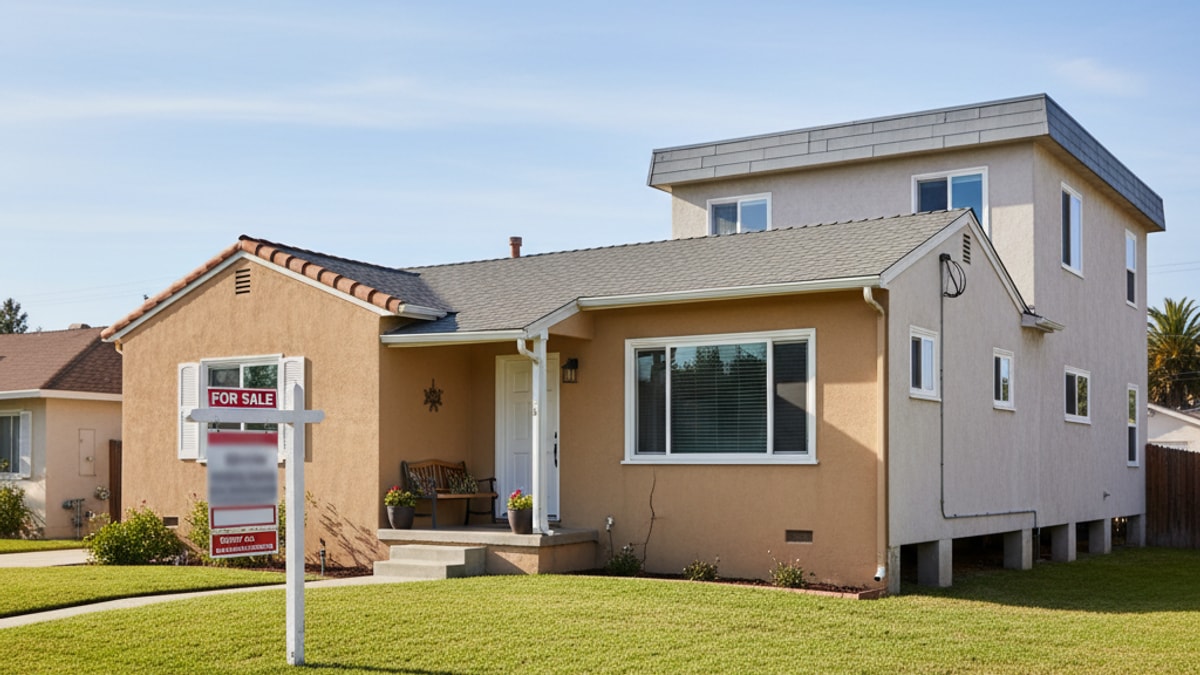
Unpermitted Addition Selling House California — What You Need to Know
In 2025, nearly 18% of California home sellers discovered mid-transaction that an unpermitted addition they didn’t build would become their problem to solve. The addition itself. A converted garage, an extra bedroom, an enclosed patio. Posed no structural issue. The issue was the paper trail that didn’t exist: no building permit, no final inspection, no certificate of occupancy. Lenders flagged the discrepancy during appraisal. Buyers demanded price reductions. Transactions that looked certain fell apart three weeks before close.
We’ve guided hundreds of California homeowners through this exact scenario. The gap between handling unpermitted work correctly and watching it derail your sale comes down to three things most real estate guides never mention: the specific disclosure timing that matters, the permit amnesty programs most counties offer, and the negotiation leverage you retain even when the work can’t be legalized.
What happens when you sell a house with unpermitted additions in California?
California Civil Code Section 1102 requires sellers to disclose all known material facts affecting property value. Including unpermitted construction. Buyers who discover undisclosed unpermitted work after close can sue for rescission or damages. Most lenders will not finance a property with known unpermitted additions until the work is either brought into compliance through retroactive permitting or removed entirely. The seller must disclose the unpermitted status on the Transfer Disclosure Statement (TDS) before accepting an offer.
The direct answer is legally required. But here’s what the statute doesn’t tell you: disclosure alone doesn’t resolve the transaction risk. Most conventional lenders will condition loan approval on one of three outcomes: full permit legalization with signed-off inspections, a contractor’s letter certifying code compliance (accepted by some lenders for minor work), or removal of the unpermitted structure and restoration to its permitted state. Title insurance companies may exclude coverage for losses related to the unpermitted work, which shifts liability risk to the buyer and further complicates financing. This article covers the exact disclosure requirements that apply at each stage of the sale, the retroactive permitting process most California counties offer, and the three negotiation paths that keep deals intact when full legalization isn’t feasible before close.
California’s Legal Disclosure Requirements for Unpermitted Additions
The Transfer Disclosure Statement (TDS). California’s standardized seller disclosure form. Includes a section titled ‘Additions, Structural Modifications, or Other Alterations’ that explicitly asks whether permits were obtained. Checking ‘no’ or ‘unknown’ triggers a mandatory explanation field where you must describe the work. Leaving this section blank when you have knowledge of unpermitted additions constitutes material misrepresentation under California Civil Code Section 1102.6, which exposes you to liability for damages, rescission, and attorney fees even after the sale closes.
The disclosure must occur before the buyer’s offer is accepted. Not after. California law allows buyers to rescind their offer within three days of receiving the TDS if material facts were not previously disclosed. We’ve seen sellers attempt to delay TDS delivery until after offer acceptance to avoid scaring off buyers. This consistently backfires during the buyer’s inspection contingency period when the unpermitted work is rediscovered and the deal renegotiates from a weaker position.
Beyond the TDS, your listing agent has an independent duty under California Business and Professions Code Section 10176 to disclose known material facts. If you inform your agent that an addition is unpermitted but instruct them not to disclose it, both you and the agent can be held liable. The buyer’s lender will order a title report and an appraisal. Both frequently flag unpermitted square footage through permit history searches and assessor record discrepancies. Appraised value often excludes unpermitted areas, which shrinks the loan amount the buyer qualifies for and forces renegotiation or deal collapse.
The Retroactive Permitting Process: Legalizing Unpermitted Work in California
Most California counties and cities operate permit amnesty or expedited legalization programs designed to bring old unpermitted work into compliance without penalty. The process begins with submitting as-built plans. Architectural drawings that document the addition’s current condition. To your local building department. A licensed architect or structural engineer typically prepares these drawings after conducting a site inspection. Fees vary by jurisdiction: Los Angeles County charges approximately $1,200–$3,500 for retroactive permits depending on square footage and complexity; smaller jurisdictions often charge $800–$1,500.
Once as-built plans are submitted, the building department reviews them against current California Building Code (CBC) standards. Not the standards in effect when the work was originally completed. This creates risk: an addition built in 1998 that met 1998 code may not meet 2026 code for seismic bracing, electrical panel clearances, or egress window dimensions. If deficiencies are identified, you must bring the work into current compliance before final inspection. This can mean opening walls to add bracing, relocating electrical panels, or widening window openings.
The timeline for retroactive permitting ranges from 60 days for straightforward additions with no code deficiencies to 6–9 months for complex structures requiring structural upgrades. We’ve worked with clients who needed to sell within 45 days. Retroactive permitting wasn’t feasible within their timeline. For these sellers, the alternative paths (described below) kept transactions moving forward when full legalization before close wasn’t possible.
Negotiation Paths When Full Legalization Isn’t Feasible Before Close
Path one: the seller-funded escrow holdback. The buyer agrees to close with the unpermitted work still unpermitted, and the seller deposits 125–150% of the estimated legalization cost into an escrow account controlled by a third party. After close, the seller (now the former owner) completes the permitting process using the escrowed funds, and any surplus is returned once final inspection is signed off. This structure works only when the buyer is using a portfolio lender or cash. Conventional lenders will not approve loans on properties with active code violations regardless of escrow holdbacks.
Path two: the as-is sale with price adjustment. The seller discloses the unpermitted status, and the buyer accepts the property in its current condition with a negotiated price reduction reflecting the cost and risk of future legalization. The reduction typically equals 100–120% of the estimated permit and upgrade cost, plus a discount for the buyer’s assumption of enforcement risk. Title insurance will exclude coverage for the unpermitted work, so the buyer must accept that liability. Cash buyers and investors purchasing for rental or flip purposes frequently accept this structure.
Path three: the contractor compliance letter. Some lenders will accept a letter from a licensed California contractor (preferably a structural engineer) certifying that the unpermitted work was completed in a workmanlike manner and meets current code standards, even without formal permit sign-off. This option works best for cosmetic or non-structural additions like finished basements, enclosed patios, or interior remodels. Structural additions. Second stories, room additions that altered the foundation, or work affecting load-bearing walls. Rarely qualify. The contractor must carry errors and omissions (E&O) insurance, and the letter must explicitly state that the work complies with current CBC standards based on destructive and non-destructive testing.
Unpermitted Addition Selling House California: Disclosure vs. Legalization Comparison
| Action | Timeline | Cost Range | Buyer Financing Impact | Seller Liability After Close | Professional Assessment |
|---|---|---|---|---|---|
| Full Retroactive Permitting | 60 days – 9 months | $3,000 – $15,000 (plans, fees, upgrades) | No impact. Lender approves once final inspection signed off | Eliminated. Work is now legally compliant | Best option when timeline allows; removes all future risk and maximizes appraised value |
| Seller Escrow Holdback | Close proceeds on schedule; permitting completed post-close | $4,000 – $18,000 (125–150% of estimated legalization cost held in escrow) | Only works with portfolio lenders or cash buyers | Seller retains responsibility to complete permitting using escrowed funds | Keeps deal on track when buyer is flexible and seller commits to post-close legalization |
| As-Is Sale with Price Reduction | Close proceeds immediately | Price reduction of $5,000 – $25,000+ depending on scope | Requires cash buyer or portfolio lender willing to accept unpermitted work | Eliminated once sale closes. Buyer assumes all code enforcement risk | Common with investor buyers; seller trades equity for speed and certainty |
| Contractor Compliance Letter | 2 – 4 weeks for engineer inspection and letter | $800 – $2,500 for engineer inspection and certification letter | Some conventional lenders accept for non-structural work; structural work typically rejected | Moderate. Letter provides some liability shield but is not equivalent to permit sign-off | Middle path for cosmetic additions when full permitting is cost-prohibitive and buyer needs financing |
Key Takeaways
- California Civil Code Section 1102 requires sellers to disclose unpermitted additions on the Transfer Disclosure Statement before offer acceptance. Failure to disclose exposes you to post-close rescission claims and damages.
- Most conventional mortgage lenders will not approve financing on properties with known unpermitted additions until the work is legalized, removed, or certified compliant by a licensed engineer.
- Retroactive permitting in California requires as-built plans reviewed against current building code. Work completed decades ago may require costly upgrades to meet 2026 standards before final inspection.
- Seller-funded escrow holdbacks allow transactions to close on schedule while the seller completes post-close permitting using funds held by a third party. This works only with portfolio lenders or cash buyers.
- As-is sales with price reductions are common with investor buyers who accept unpermitted work in exchange for a discount equal to 100–120% of estimated legalization cost plus a risk premium.
What If: Unpermitted Addition Selling House California Scenarios
What If the Buyer’s Lender Discovers the Unpermitted Addition During Appraisal?
Disclose it before appraisal is ordered. Once the appraiser flags it in the report, the lender will condition loan approval on resolution. If you’ve already disclosed it on the TDS and the buyer proceeded with their offer, the appraisal will likely exclude the unpermitted square footage from the home’s appraised value, which reduces the loan-to-value ratio and may require the buyer to increase their down payment. At that point, you can offer to reduce the sale price to keep the buyer’s loan amount within their qualified range, initiate retroactive permitting if timeline allows, or pivot to a backup offer from a cash buyer who isn’t constrained by lender requirements.
What If the Addition Was Built Before You Purchased the Home?
You’re still required to disclose it. California disclosure law doesn’t exempt sellers who didn’t perform the unpermitted work. If you have knowledge of it, you must disclose it. Review your purchase documents: if the unpermitted status was disclosed to you when you bought the home, you have documentation proving you inherited the issue rather than created it, which can help in negotiations. If it wasn’t disclosed to you, you may have a claim against your seller for non-disclosure. But that doesn’t relieve your obligation to disclose it to your buyer now.
What If the City Sends a Code Enforcement Notice After You’ve Listed the Property?
Code enforcement notices are public record and will appear on the title report, so your buyer will discover it regardless of whether you disclose it separately. Respond to the notice immediately. Most California jurisdictions allow 30–90 days to either obtain permits or remove the unpermitted structure before penalties escalate. If you’re already in contract, notify your buyer in writing and offer them the option to proceed with a price reduction reflecting the correction cost, allow you additional time to resolve the violation before close, or cancel the contract and receive their earnest money deposit back. Ignoring the notice triggers daily fines that accumulate as a lien against the property and must be paid at close.
The Unfiltered Truth About Unpermitted Additions and California Home Sales
Here’s the honest answer: most unpermitted additions in California don’t create structural safety issues. They create financing and liability issues. The work itself is often sound. The problem is the missing paper trail that lenders and title companies require to eliminate their risk exposure. Sellers who think they can avoid disclosure by staying quiet consistently end up in worse negotiating positions than sellers who disclose upfront and control the narrative.
The buyers most likely to walk away are the ones who discover unpermitted work during their inspection contingency period after they’ve already emotionally committed to the home. Buyers who know about it from day one. Because you disclosed it in the listing remarks and on the TDS before they made an offer. Self-select into the transaction already aware of the issue and prepared to negotiate a solution. The disclosure itself doesn’t kill deals; the surprise discovery during escrow does.
How Unpermitted Work Affects Property Tax Assessments in California
Unpermitted additions rarely appear on county assessor records because assessors rely on permit data to update property square footage and assessed value. This creates a temporary benefit. You’re not paying property tax on the unpermitted square footage. And a long-term risk. When you legalize the addition through retroactive permitting, the assessor will reassess the property and increase your annual tax bill to reflect the additional square footage. California’s Proposition 13 limits assessed value increases to 2% annually, but new construction (which includes previously unpermitted work brought into compliance) triggers a supplemental reassessment at current market value.
The tax increase is unavoidable if you pursue retroactive permitting. But it becomes the buyer’s obligation after close, not yours. If you complete permitting before selling, your tax bill increases for the months you own the newly compliant property. If the buyer assumes responsibility for permitting post-close, they bear the reassessment. This dynamic sometimes makes as-is sales with price reductions more attractive than pre-sale legalization, particularly when the seller has owned the home for decades and benefits from a low Prop 13 base assessment.
If the addition increased living space by 400+ square feet, expect annual property tax to increase by $1,200–$3,000 depending on your county’s assessment rate and current market values. Buyers factoring this into their monthly housing cost may negotiate a larger price reduction than the permit cost alone would justify.
Contact Home Helpers Group to discuss your property and request a no-obligation cash offer.
Frequently Asked Questions
Can I sell a house in California with an unpermitted addition without disclosing it?
No — California Civil Code Section 1102 requires sellers to disclose all known material facts affecting property value, including unpermitted construction, on the Transfer Disclosure Statement before accepting an offer. Failure to disclose exposes you to post-close rescission claims, damages, and attorney fees even after the sale completes. Buyers who discover undisclosed unpermitted work can sue for fraud and breach of contract.
How much does it cost to legalize an unpermitted addition in California?
Retroactive permitting costs range from $3,000 to $15,000 depending on the addition’s size, complexity, and jurisdiction. This includes as-built architectural plans ($800–$2,500), permit fees ($800–$3,500), and any code upgrades required to bring 20- or 30-year-old work into compliance with current California Building Code standards. Structural additions requiring seismic retrofits or foundation work can exceed $20,000.
Will a lender finance a California home with an unpermitted addition?
Most conventional mortgage lenders will not approve financing on properties with known unpermitted additions until the work is legalized through retroactive permitting, certified compliant by a licensed engineer, or removed. Some portfolio lenders and credit unions will finance unpermitted work if the buyer accepts higher interest rates and reduced loan-to-value ratios. Cash buyers face no financing restrictions.
What happens if I don’t disclose an unpermitted addition and the buyer finds out after closing?
The buyer can sue for rescission (unwinding the sale and returning the property to you), damages equal to the cost of bringing the work into compliance, and attorney fees under California Civil Code Section 1102. If the buyer can prove intentional concealment, they may also recover punitive damages. Title insurance excludes coverage for undisclosed unpermitted work, so you bear the full liability personally.
How long does retroactive permitting take in California?
Retroactive permitting timelines range from 60 days for simple additions with no code deficiencies to 6–9 months for complex structures requiring as-built plans, structural engineer review, code upgrades, and multiple inspections. Los Angeles and San Francisco typically take 90–120 days for straightforward cases. Smaller jurisdictions often process permits in 60–75 days.
Can I remove the unpermitted addition instead of legalizing it?
Yes — removal is a legally compliant alternative to retroactive permitting. You must hire a licensed contractor to demolish the addition, restore the original structure to its permitted condition, and obtain a demolition permit and final inspection sign-off. Removal costs typically range from $5,000 to $25,000 depending on the addition’s size and whether structural restoration is required.
What is a seller escrow holdback for unpermitted work in California?
A seller escrow holdback allows the transaction to close with unpermitted work still unpermitted by depositing 125–150% of estimated legalization costs into a third-party escrow account. After close, the seller completes retroactive permitting using the escrowed funds, and any surplus is returned once final inspection is signed off. This structure works only with portfolio lenders or cash buyers.
Does homeowners insurance cover unpermitted additions in California?
Most California homeowners insurance policies exclude coverage for losses related to unpermitted construction. If a fire or structural failure involves an unpermitted addition, the insurer may deny the claim or reduce the payout to exclude the unpermitted area. Some insurers will cover unpermitted work if you disclose it and pay a higher premium, but coverage is limited.
How do I find out if my California home has unpermitted additions?
Order a permit history report from your city or county building department — this lists all building permits issued for your address since records were digitized. Compare the permitted square footage to your home’s current condition. Discrepancies (extra bedrooms, enclosed patios, finished garages not reflected in permit records) indicate likely unpermitted work. A licensed home inspector can identify structural modifications that lack permits.
What is the difference between an unpermitted addition and a code violation in California?
An unpermitted addition is construction completed without obtaining required building permits — it may or may not meet current code standards. A code violation is construction (permitted or unpermitted) that fails to meet California Building Code safety requirements. Unpermitted work becomes a code violation when a building inspector or code enforcement officer identifies it and issues a notice of violation requiring correction.
